Tip #1 - Serving
There are new rules (and some old rules) to be aware of when serving.
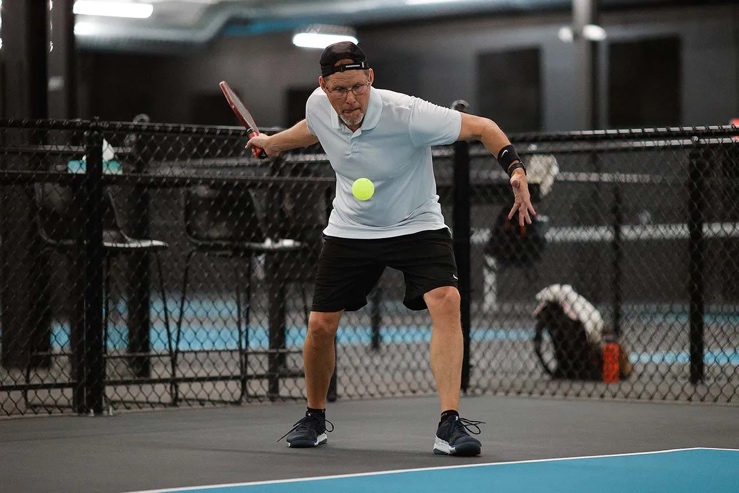
We all know serves must be underhand, but the added wrinkle is that the paddle must be below the server’s waist. Sometimes people cock the wrist making the striking of the ball too high. The service motion needs to be upward.
My Favourite Rule: “Let serves”, (i.e. hitting the net), are allowed if they land in the opposite service court.
A Common Error: the servers’ feet must be behind the line when serving and not hit the court or line until after the ball is struck.
The serve must land in the diagonal court with the middle line “in”. The kitchen line however is “short” and an out serve.
The ball can be dropped but not tossed or thrown with any force prior to either being hit off a bounce or in the air.
And the “weird rule: If you fail to contact the ball on service, it is an illegal serve. i.e. no “do overs”.
Tip #2 - Where to stand on serve
Where Does Your Partner Stand while you are serving?
It is a good strategy for your partner to stay back at the service line since returns may go deep and the ball must bounce before being returned.
There is however, NO RULE on this. It is a strategy but not a fault if you move in.
We all know it is easier to run up then back pedal though, so keeping your feet glued behind the baseline until after the service return is hit is a great idea.
Tip #3 - In or Out? Only you get to decide!
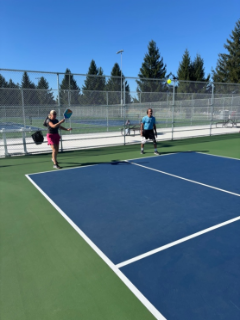
The receiving team is solely responsible for making line judgements.
The image below shows that depending on where you stand you may find this difficult.
“Out” calls can be made after hitting or returning the ball but must be made before the opponents return the ball again.
If you do not see a ball land, then you must assume it is “in”.
If partners disagree, then the point is replayed.
Spectators or opponents should not generally add their opinion.
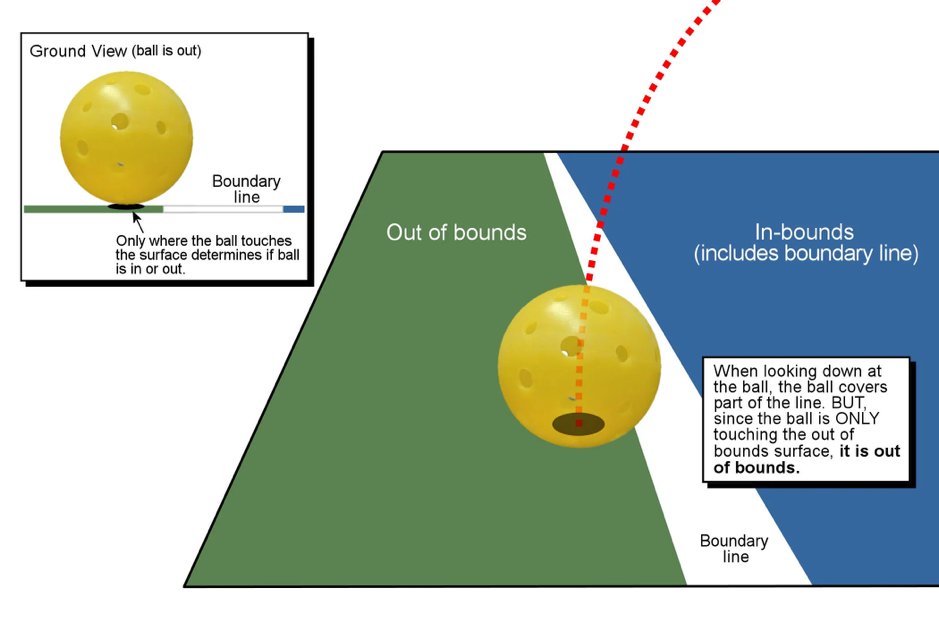
Source: USAPA rules
Tip #4 - Getting to the net - YES...DO IT!
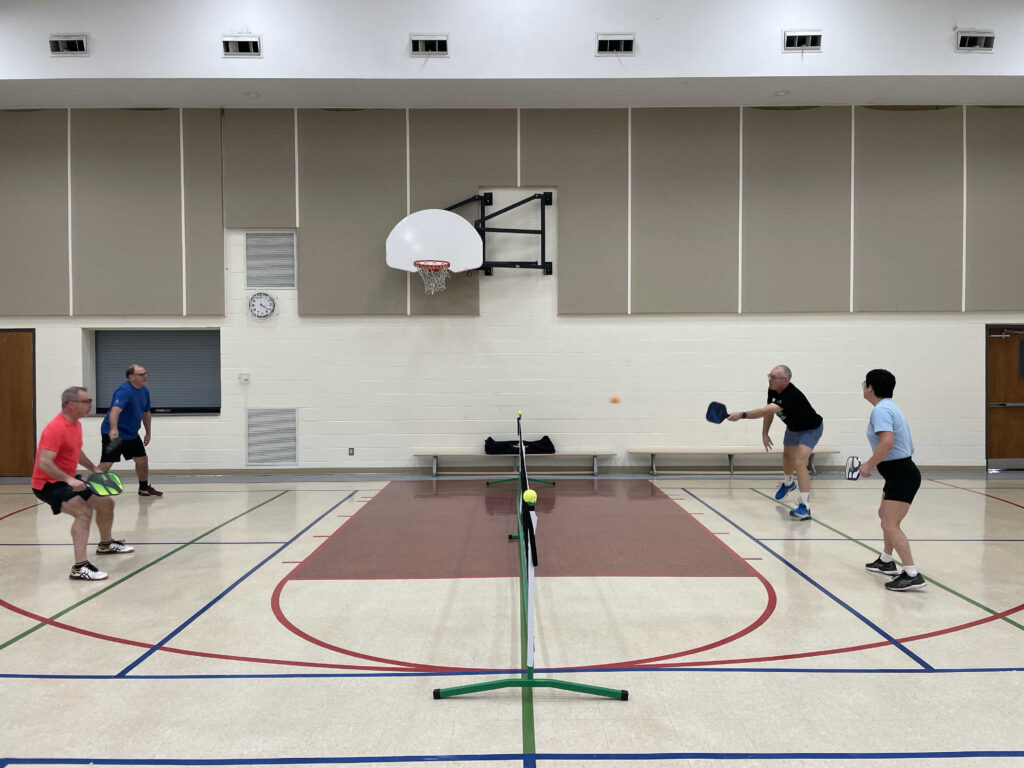
After the 2- bounce rule, getting to the net is the best strategy. If you can as a team get to the net you will most likely win the point. Why? You give far less time to your opponent when you return shots from the NVZ (kitchen) line. Get as close to the line as you can, racquet up, on your toes and ready, and you will be able to return shots and play as a team. You will be able to see each other and work together. If one stays back, you are leaving lots of the court open and your partner has no idea where you are and whether to play shots. While it takes practice to get comfortable, this is without a doubt the winning strategy in doubles pickleball.
Tip #5 - The mental game
Almost ever point ends with a missed shot. That might be from a super-winner from your opponent or your own misplayed ball. One of the most common things I hear is “I’m playing SO BADLY (accompanied by drooping body language).” A common feeling is that “I’m letting my partner down!”.
So while we work on shot technique and what to do when, the most important thing to practice is being positive with yourself.
Remember the neat shots. As Ted Lasso said, “mind of a goldfish” for the dumb mistakes (i.e. goldfish he says have the shortest memory). Give yourself positive coaching tips to focus on. “Racquet up, bend your knees, follow up through” or other little tips or things you want to work on are great mental anchors.
Or when things are really in a “pickle”, see what is different about a strong opponent and what you can take away. Deep breath, slow exhale and carry on! The score truly doesn’t matter in any situation… heck, usually we can’t remember what it is!